

When one tooth is missing, patients often discover that there is more than one way to replace it. Two common options are a dental implant and a dental bridge. Both can restore the visible space and improve function, but they use very different forms of support. A dental implant is supported by an implant placed in the jaw, while a traditional bridge typically relies on neighboring teeth. Understanding the differences can help you ask better questions when planning treatment at Arc Dental Implant and Cosmetic Center in Midtown Manhattan.
The dental implant vs bridge decision should consider more than appearance. The health of the neighboring teeth, available bone, gum condition, bite, treatment time, maintenance preferences, medical history, cost, and long-term restorative goals can all influence the recommendation. Neither solution is automatically best for every missing tooth.
How a Dental Implant Replaces One Missing Tooth
A single dental implant uses an implant post placed in the jaw to support a replacement tooth. After the implant is appropriately integrated and ready for restoration, a connector and crown are used to complete the visible portion of the tooth replacement.
One of the main differences in the dental implant vs bridge comparison is that an implant does not normally require the neighboring teeth to serve as supports for the replacement tooth. This can be particularly appealing when the teeth on each side of the space are healthy and have not already received large restorations.
However, dental implant treatment involves surgery and requires evaluation of the bone, gums, medical history, bite, and restorative space. Treatment may also involve healing time, and some patients may need grafting or other preparation before the final crown can be completed.
How a Traditional Dental Bridge Works
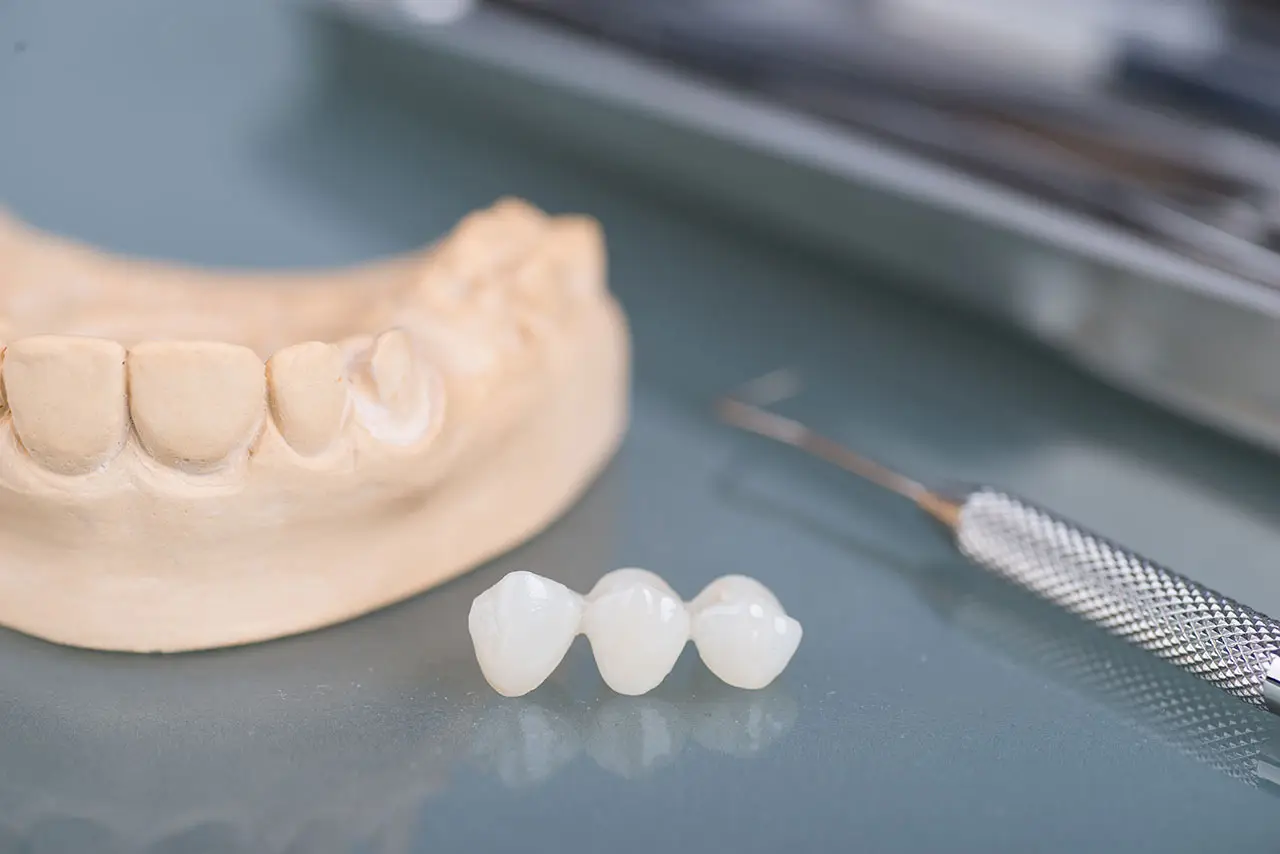
A traditional dental bridge spans the missing-tooth space by connecting a replacement tooth to restorations placed on neighboring teeth. In a common design, the teeth on each side of the space are prepared for crowns, and those crowns are connected to an artificial tooth between them.
A bridge can provide a fixed replacement without placing an implant in the jaw. For some patients, this can make treatment more straightforward, especially when the neighboring teeth already need crowns or substantial restorative work.
At the same time, preparing healthy neighboring teeth is a major consideration. If the teeth beside the missing space are intact, using them as bridge supports may require removing healthy tooth structure. Therefore, the condition of those teeth is one of the most important factors in the dental implant vs bridge decision.
Benefits of Comparing a Dental Implant vs Bridge
- You can evaluate the neighboring teeth: The comparison helps determine whether adjacent teeth would benefit from crowns or whether preserving them untouched is preferable.
- You can consider maintenance before treatment: Implants and bridges require different cleaning techniques, so understanding daily care can influence the choice.
- You can compare treatment timing: A bridge may sometimes be completed sooner, while implant treatment may involve surgical healing before the final restoration.
- You can consider bone and gum conditions: A dental implant depends on the implant site, while a bridge depends primarily on the condition of the supporting teeth.
- You can plan around the entire bite: Tooth position, chewing forces, available space, and the condition of opposing teeth can affect both options.
- You can make a long-term restorative decision: Comparing the dental implant vs bridge pathways helps clarify what each option may require in future maintenance and repair.
The most useful comparison is specific to your mouth. A general list of advantages cannot determine whether a dental implant or bridge is the better choice for one particular tooth.
What Condition Are the Neighboring Teeth In?
The teeth on either side of the missing space often have a major influence on treatment planning. If both teeth are healthy, unrestored, and structurally strong, a dental implant may allow the dentist to replace the missing tooth without preparing those neighboring teeth for crowns.
However, imagine that both adjacent teeth already have large fillings, significant fractures, or other conditions that make crowns appropriate. In that situation, using them as bridge supports may become more reasonable because the teeth already need restorative coverage.
This is why the dental implant vs bridge choice cannot be made by looking only at the empty space. The health of the entire area matters.
How Bone Affects the Dental Implant vs Bridge Decision
A dental implant requires adequate support in the jaw. After a tooth is lost, the bone in that area can change over time. Some patients still have an appropriate foundation for implant placement, while others may need grafting or a modified treatment approach.
A traditional bridge does not require an implant to be placed in the missing-tooth site. Therefore, reduced bone volume may affect implant treatment more directly than bridge treatment. However, the shape of the gum and ridge still matters for appearance and hygiene beneath the replacement tooth.
Dental imaging and a clinical examination can help determine whether the implant site is appropriate and whether additional procedures should be considered.
Which Option Usually Takes Longer?
A bridge can often be completed without waiting for an implant to integrate with the jaw. For that reason, bridge treatment may sometimes reach the final restoration sooner.
Dental implant treatment can involve several phases. These may include evaluation, possible extraction or grafting, implant placement, healing, and final restoration. The actual sequence varies substantially. Some patients have a relatively direct treatment pathway, while others benefit from staged care.
However, speed should not be the only factor. A treatment that takes longer may still be appropriate if it better fits the health of the neighboring teeth and the patient’s long-term goals. Likewise, a bridge may be an excellent choice when its supporting teeth are appropriate candidates.
How Do You Clean a Dental Implant Compared With a Bridge?
A single implant crown is cleaned much like a natural tooth, with attention to the gum line and the areas between teeth. Your dental team may recommend floss, interdental brushes, or other tools depending on the shape of the restoration.
A traditional bridge requires cleaning beneath the replacement tooth because the connected restoration prevents ordinary floss from passing directly down between each unit. Patients may use floss threaders, specialized floss, interdental brushes, or other recommended tools.
Neither option is maintenance-free. A dental implant can develop inflammation in the surrounding tissues, and an implant-supported crown can wear or require repair. A bridge can develop decay around its supporting teeth or experience wear, fracture, or loosening. Daily hygiene and professional monitoring remain important with either choice.
Can a Dental Implant Get a Cavity?
The implant and implant crown do not develop tooth decay in the way natural tooth structure does. However, the tissues around a dental implant can still become inflamed or diseased if plaque accumulates and risk factors are not well controlled.
This means that dental implants still require regular brushing, interdental cleaning, and professional care. In addition, the implant restoration and bite should be evaluated over time.
By comparison, the natural teeth supporting a traditional bridge can develop cavities, particularly near restoration margins where plaque may accumulate. This difference can matter when considering the long-term maintenance of a dental implant vs bridge.
What Happens If a Bridge Fails?
If a bridge develops a problem, the solution depends on what has failed. Sometimes the restoration itself is damaged while the supporting teeth remain healthy. In other situations, decay, fracture, or loss of support in one of the abutment teeth may affect the entire connected bridge.
Because the teeth are linked together, a problem with one support can influence the larger restoration. This does not mean bridges are unreliable, but it is an important maintenance consideration.
A single dental implant has a different pattern of potential complications. The crown may chip or loosen, components may require attention, or the tissues around the implant may develop problems. Each treatment therefore has its own maintenance profile.
What If the Missing Tooth Is in the Front of the Smile?
Replacing a front tooth requires careful attention to more than simply filling a space. The gum line, neighboring tooth proportions, shade, tooth position, lip movement, and available bone can all affect the result.
In a dental implant vs bridge comparison for a front tooth, the dentist also evaluates the appearance of the neighboring teeth. If those teeth are healthy and attractive, preserving them may be a priority. If they already require crowns, a bridge may fit differently into the restorative plan.
The condition of the gum and bone in the missing-tooth site also matters. Dental implant placement in a visible area requires careful three-dimensional planning because the implant must support a crown that looks appropriate within the smile.
What If the Missing Tooth Is a Back Tooth?
Back teeth experience substantial chewing forces. The dental implant vs bridge decision should therefore consider the strength of the supporting structures, available space, bite forces, and the condition of neighboring and opposing teeth.
A dental implant can provide independent support for the replacement tooth. A bridge distributes forces through the supporting natural teeth. Either design needs to be planned around how the patient bites and chews.
If the missing space has been present for a long time, neighboring teeth may have shifted or the opposing tooth may have moved. These changes can affect available restorative space and may require additional planning.
Can You Replace a Missing Tooth Later?
Patients sometimes postpone replacement because the missing tooth is not visible or does not cause immediate discomfort. In some cases, monitoring the space may be reasonable. However, changes can occur over time. Neighboring teeth may shift, opposing teeth can move, and bone in the missing-tooth area may change.
Therefore, even if you are not ready for treatment, it can be useful to discuss the options early. Understanding whether a dental implant, bridge, or another solution may be appropriate allows you to make an informed decision rather than waiting until additional changes complicate the space.
How Cost Fits Into the Dental Implant vs Bridge Decision
The initial cost of treatment is important, but it should be considered alongside treatment sequence, maintenance, and possible future repairs. A dental implant involves surgical and restorative phases. A bridge involves treatment of the supporting teeth and fabrication of the connected restoration.
Insurance benefits may also treat the options differently, and coverage does not necessarily determine which treatment is clinically preferable. If you are comparing costs, ask what is included in each treatment plan and whether additional procedures may be needed.
Arc Dental Implant and Cosmetic Center can discuss the expected treatment sequence and financial considerations after evaluating the site.
Frequently Asked Questions About a Dental Implant vs Bridge
Is a dental implant always better than a bridge?
No. A dental implant can preserve neighboring teeth in many situations, but a bridge may be appropriate when the supporting teeth already need crowns or when implant treatment is not preferred or suitable. The decision depends on the individual case.
Which lasts longer, a dental implant or bridge?
Both options can provide long-term service, but neither is guaranteed to last forever. Longevity depends on oral health, maintenance, bite forces, restoration design, underlying support, and other individual factors.
Is a dental implant harder to clean than a bridge?
A single implant crown can often be cleaned similarly to a natural tooth, while a bridge requires cleaning underneath the connected replacement tooth. Both require consistent daily care.
Do I need a bone graft before a dental implant?
Not every patient needs grafting. The dentist evaluates the amount and shape of available bone, the planned implant position, and other anatomical factors before recommending additional procedures.
Can I get a bridge if the neighboring teeth are healthy?
Possibly, but the treatment usually requires preparing the supporting teeth. Your dentist can explain whether preserving those teeth and using a dental implant may be a more conservative alternative.
Where can I compare a dental implant vs bridge in Midtown Manhattan?
Arc Dental Implant and Cosmetic Center is located at 474 7th Avenue, Floor 4, New York, NY 10018. Call (212) 687-4400 or Contact Us to request an evaluation.
Replace the Missing Tooth With the Whole Area in Mind
The dental implant vs bridge decision is not simply about choosing between two replacement teeth. It is about deciding how the replacement should be supported, what happens to the neighboring teeth, how the area will be cleaned, how much treatment time is involved, and what each approach may require over the years.
If you are deciding between a dental implant and bridge in Midtown Manhattan, contact Arc Dental Implant and Cosmetic Center at 474 7th Avenue, Floor 4, New York, NY 10018. Call (212) 687-4400 or Schedule a Consultation online.